This level is locked
Only administrators see this. Unlocks until you close the tab, so you can review the other levels’ content.
JLPT study area
Create a free account to start the JLPT programme and keep all your progress.
- 4,890 N5–N1 vocabulary words, searchable in place
- 737 N5–N1 grammar points with full explanations
- 755 drills, 10 mock tests and 176 reading lessons
- Save progress, mark points learned, sync across devices
Bilingual articles stay free to read, no account needed.
問題紹介
Introducing 5 types of 聴解 N3 questions
Book pp. 1–11 ・ CD A-01〜A-05 ・ 5 例題
- Press ▶ listening (one track per 例題). There is a button 0.75× 使い方 ・ How to use ↺5s ガイド How to use
- Pick your answer with the radio button → go to the bottom bar and click 採点する for grading.
- Only after grading, click スクリプト and 答えと解説 to read the script and analysis (with a Vietnamese translation of each line).
- Correct practice order: listen without text → listen again with text → read the explanation.
The 5 question types of 聴解 N3
- 1 課題理解 — Task-based comprehension(問題理解)
- 2 ポイント理解 — Comprehension of key points(重点理解)
- 3 概要理解 — Comprehension of general outline(概要理解)
- 4 発話表現 — Verbal expressions(语言表达)
- 5 即時応答 — Quick response(即时应答)
1課題理解
まとまりのある話から依頼や指示、提案などを聞き取り、何をするべきかを考える問題です。選択肢は問題用紙に書かれていて、絵があるものと文字だけのものがあります。実際の試験では、問題の前に練習があります。
VI ・ Listen to a complete conversation or monologue and catch the lines requests, instructions, suggestions, then infer the task to do. The choices are printed on the question sheet (some with pictures, some text only). The real exam has one practice item before this section.
| Q | 日本語のクラスで女の先生が発表の準備について話しています。男の学生はまず何をしなければなりませんか。 |
|---|---|
| VI | In Japanese class, the teacher is talking about preparing a presentation. What must the male student do first? |
| 女 | 先週お話ししたように、あさっての授業では発表をしてもらいますから、準備しておいてください。 As I said last week, you will give presentations the day after tomorrow, so prepare in advance. |
|---|---|
| 男 | 発表の時パソコンを使ってもいいですか。写真を見せたいんですけど。 May I use a computer during my presentation? I would like to show some photos. |
| 女 | いいですけど、リーさんはまだ原稿ができていないでしょう? 写真だけでは発表になりませんよ。すぐにやって、見せてください。 Okay, but Lee has not finished yet draft right? Pictures alone do not make a presentation. Do it now and show it to me. |
| 男 | はい。書き直すのはまとめのところだけでいいですか。 All right. So I only need to rewrite the conclusion? |
| 女 | ええ、そこがちょっとわかりにくいので、もう少し直さないと。ほかの準備は原稿が完成してからでいいです。それから、あしたはグループで発表の練習をするので、漢字の読み方も確認してきてくださいね。 Right, that part is a bit hard to follow, so it needs a little more fixing. As for the other preparations, after the draft is finished. Also, tomorrow you will practice presentations in groups, so check the kanji readings beforehand. |
答え 2
質問で「まず」と言っているので、最初にすることを考えます。先生は「原稿ができていない」と言った後、「すぐにやって、見せて」と言っています。学生は「はい」と言って指示に同意し、「書き直すのはまとめのところだけでいい(か)」と確認しているので、2が答えです。
| # | 選択肢 | 判定 ・ Meaning |
|---|---|---|
| 1 | 写真を準備する | Preparing the photos — that is only the student idea; the teacher did not ask for it first |
| 2 ● | 原稿を直す | Revise the draft — the teacher says「すぐにやって」and the student confirms → the first thing to do |
| 3 | 発表の練習をする | Practicing the presentation — this is a task tomorrow, by group |
| 4 | 漢字の読み方を確認する | Check the kanji readings — also for tomorrow |
このように、指示や依頼などするべきことを示す言葉や、相手が同意しているかどうかに注意します。
VI ・ The question contains「まず」, so identify the first task. Tip: pay attention to words that indicate the task to do (instruction / request) and see whether the other person whether they agree or not; tasks tied to another time marker (あした…) are usually traps.
2ポイント理解
まとまりのある話から、質問されたことにポイントを絞って聞き取る問題です。出来事の理由や目的、話す人の気持ちなどについて質問されます。実際の試験では、問題の前に練習があります。
VI ・ Listen and narrow down the correct focus that the question asks for: a reason, purpose, the speaker’s feelings… The question is read before, there is time to read the options.
| Q | 女の人と男の人が話しています。男の人はどうして飲み会に行けませんか。 |
|---|---|
| VI | A woman and a man are talking. Why can the man not go to the party? |
| 女 | 渡辺君、あしたの飲み会、行く? Watanabe, are you going to the party tomorrow? |
|---|---|
| 男 | あー、行こうと思っていたんだけど……。 Oh, I was planning to go too… |
| 女 | あ、アルバイトの日か。 Oh, is it on the day of your part-time job? |
| 男 | それは前から休みもらってたからいいんだけど。あしたはさ、姉の子供を預かってほしいって頼まれちゃってね。友達の結婚式に行くからって。 As for that, I asked for leave in advance, so it is okay. Tomorrow, asked by the older sister to look after a child help because she is attending a friend’s wedding. |
| 女 | お兄さんはいないの? Is your older brother (brother-in-law) not home? |
| 男 | うん、いつもなら週末は休みなんだけど……。子供が1人じゃかわいそうだしね。 Yes, he normally has weekends off, but… I feel bad leaving the child alone. |
| 女 | ふうん。大変そうだけど、頑張ってね。 I see. That sounds tough; keep it up. |
答え 2
男の人が飲み会に行けない理由を、選択肢を手がかりに考えます。「アルバイト」は「いい(=問題ない)」と言っているので違います。「子供」を「預かってほしい」と頼まれたと言っているので、2が答えです。「友達の結婚式に行く」のは姉で、「いつもなら週末は休みなんだけど(=今週は休みではない)」のは兄です。
| # | 選択肢 | 判定 ・ Meaning |
|---|---|---|
| 1 | アルバイトがあるから | It does appear, but the leave was already requested →「いいんだけど」= not the reason |
| 2 ● | 子供の世話をするから | Asked to look after the sister child →「頼まれちゃって」= the real reason |
| 3 | 友達の結婚式に行くから | The person attending the wedding is agree239 text-based drill items |
| 4 | 週末は休みではないから | The matter of brother-in-law (cannot take leave), not the man |
このように、話の中に出てくる選択肢と同じ言葉、または同じ意味の言葉に注意して、それについて話す人が言いたいこと(肯定的か否定的か)を考えます。
VI ・ Trap in this type: all 4 choices appear in the conversation. Listen to whether each option who it concerns and the speaker affirmative or negative it.
3概要理解
まとまりのある話を聞いて、全体として言いたいことや話す人の意図を考える問題です。実際の試験では、問題の前に練習があります。
VI ・ Nothing is printed on the question sheet, no question before listening. Listen to the whole passage → hear the question and the 4 choices → choose. The focus is overall topic / speaker’s intention.
選択肢は音声だけです(問題用紙には何も印刷されていません)。 ・ 4 audio-only options — listen then choose the number.
| 状況 | テレビで女の人が話しています。 A woman is speaking on television. |
|---|---|
| 女 | 試験の時などに、緊張してしまって困ったことはありませんか。そんな時に役立つ、いくつかのやり方をご紹介しましょう。ある人は、緊張しているときに「お父さん、ありがとう。お母さん、ありがとう」とほかの人への感謝を心の中で言うと、落ち着けるそうです。また、体に一度ぐっと力を入れて、その後力を抜くと、落ち着けるという人もいます。一度試してみてはいかがですか。 Have you ever struggled with stress during exams? I would like to introduces several ways useful in moments like this. Some people say silently thanking their parents when tense helps them calm down. Others tense their whole body briefly and then relax, which eases the tension. Try it once. |
| Q | 女の人は何について話していますか。 What is the woman talking about? |
|---|---|
| 1 | 人が緊張する理由 ・ Why people become stressed |
| 2 | 落ち着くための方法 表現リスト ・ Expression finder |
| 3 | 両親への感謝の伝え方 ・ Ways to express gratitude to parents |
| 4 | 力の入れ方と緊張の関係 ・ The relation between tensing up and stress |
答え 2
「ご紹介しましょう」と言って示している話題は、「緊張してしま(う)」ときに「役立つ、いくつかのやり方」なので、2が答えです。「感謝を心の中で言う」ことと「体に一度ぐっと力を入れて、その後力を抜く」ことはやり方の例です。
このように、全体として何について話しているかや、話す人の意図に注意します。
VI ・ The phrase「〜をご紹介しましょう」signals main topic. The two specific examples are only evidence — choosing a supporting detail as the answer is the classic 概要理解 trap.
4発話表現
絵を見ながら、その人の立場に立って、場面や状況に合う発話を考える問題です。依頼したり許可を求めたりする表現を答えます。問題の前に練習はありません。
VI ・ Look at the picture, put yourself in the position of the person marked by the arrow (→), and choose the line fits the situation among the three options. It is usually the line request / permission. button there is a practice item first.
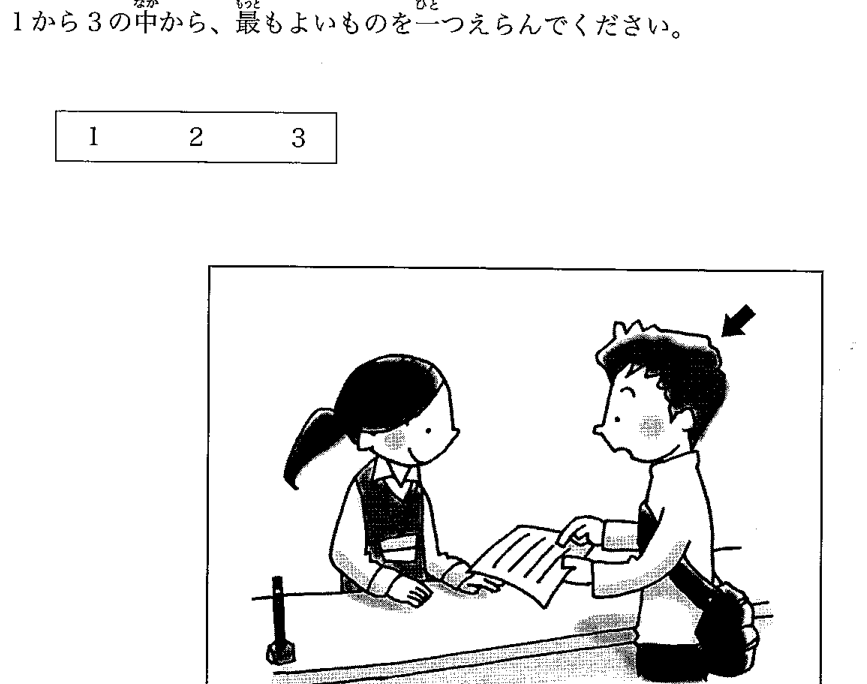
3つの選択肢は音声だけです。 ・ 3 options available in audio only.
| Q | 大学で事務の人に書類の書き方を聞きます。何と言いますか。 At university, you ask the office staff about how to fill in the form. What would you say? |
|---|
| 1 | あの、この書類の書き方、教えてもよろしいでしょうか。 = “I show how “Would you please…?” → the speaker becomes the person teaching, so the subject is wrong (asking permission for one’s own action). |
|---|---|
| 2 | あの、この書類の書き方、教えていただきたいんですけど。 = “I would like to be shown how to write it…” → correct: the speaker asks the other person to teach |
| 3 | あの、この書類の書き方、教えていただきましょうか。 =「〜ましょうか」 is suggest/invite → not used for making a request in this situation |
答え 2
状況説明文で「事務の人に聞く」と言っているので、事務の人がやじるし(→)の人(話す人)に書き方を教えます。2は話す人が教えてほしいと頼む言い方で、状況と合います。1は話す人が許可を求める言い方、3は話す人が提案する言い方です。
このように、状況や場面を理解して、それに合う表現を選びます。だれの動作を表す表現かや、ある状況で使われる決まった表現に注意します。
VI ・ Three-step routine: (1) listen to the lead-in to find out who does what, (2) identify whether the speaker is the requester good the doer, (3) eliminate patterns with the wrong subject(〜てもよろしいでしょうか=permission for myself/〜ましょうか=offering).
5即時応答
質問、報告、依頼、あいさつなどの短い文を聞いた後、すぐにそれに合う答え方を考える問題です。実際の試験では、問題の前に練習があります。
VI ・ Listen a short sentence (question / report / request / greeting), then immediately choose the fitting reply from three options. The test nothing is printed. Track A-05 contains two items, (1) and (2).
| 女 | 座ってもかまいませんか。 May I sit here? |
|---|---|
| 1 | いえ、おかげさまで。 ・ “No, thanks to you…” — a reply to a polite inquiry, unrelated |
| 2 | はい、失礼します。 Contents the person asking permission spoken by oneself, not a permission statement |
| 3 | ええ、おかけください。 ・ “Yes, please have a seat” — correct(かける=the honorific for 座る) |
答え 3
話す人が座るために許可を求める表現で、3がそれに合う返事です。
VI ・「〜てもかまいませんか」= asking permission → the reply must permit:「おかけください」. Remember 座る ⇔ おかけになる/おかけください.
| 女 | 今日、なんで遅れたの? self-marking star Why are you late? |
|---|---|
| 1 | 今日は自転車だよ。 ・ Answering「なんで=by what means」→ trap |
| 2 | 電車が止まってて。 学習の記録 Last 28 days reason → correct |
| 3 | ポストに入れたよ。 ・ Unrelated |
答え 2
「なんで」という会話表現を使って理由を聞いているので、2が最初の文に合う返事です。
このように、だれの動作を表す表現かや、会話で使われる表現、敬語などに注意します。
VI ・「なんで」 has two meanings: “why” (=どうして) and “by what means” (=何で/なにで). Here it goes with 遅れた, so it is reason. Choice 1 is exactly the trap that plays on the other meaning.
✓解答一覧 ・ Answer sheet
| 例題 | 形式 | CDs | 答え |
|---|---|---|---|
| 例題 1 | 課題理解 | A-01 | 2 原稿を直す |
| 例題 2 | ポイント理解 | A-02 | 2 子供の世話をするから |
| 例題 3 | 概要理解 | A-03 | 2 落ち着くための方法 |
| 例題 4 | 発話表現 | A-04 | 2 教えていただきたいんですけど |
| 例題 5 (1) | 即時応答 | A-05 | 3 ええ、おかけください |
| 例題 5 (2) | 即時応答 | A-05 | 2 電車が止まってて |