JNews

This level is locked

パート主婦「年収106万円未満」でも手取り減? 10月から「週20時間」で社保加入へ…損しない働き方“2つの選択肢”(弁護士JPニュース) - Yahoo!ニュース
N2 economy Original · 1 min read · 34 views · 24 words

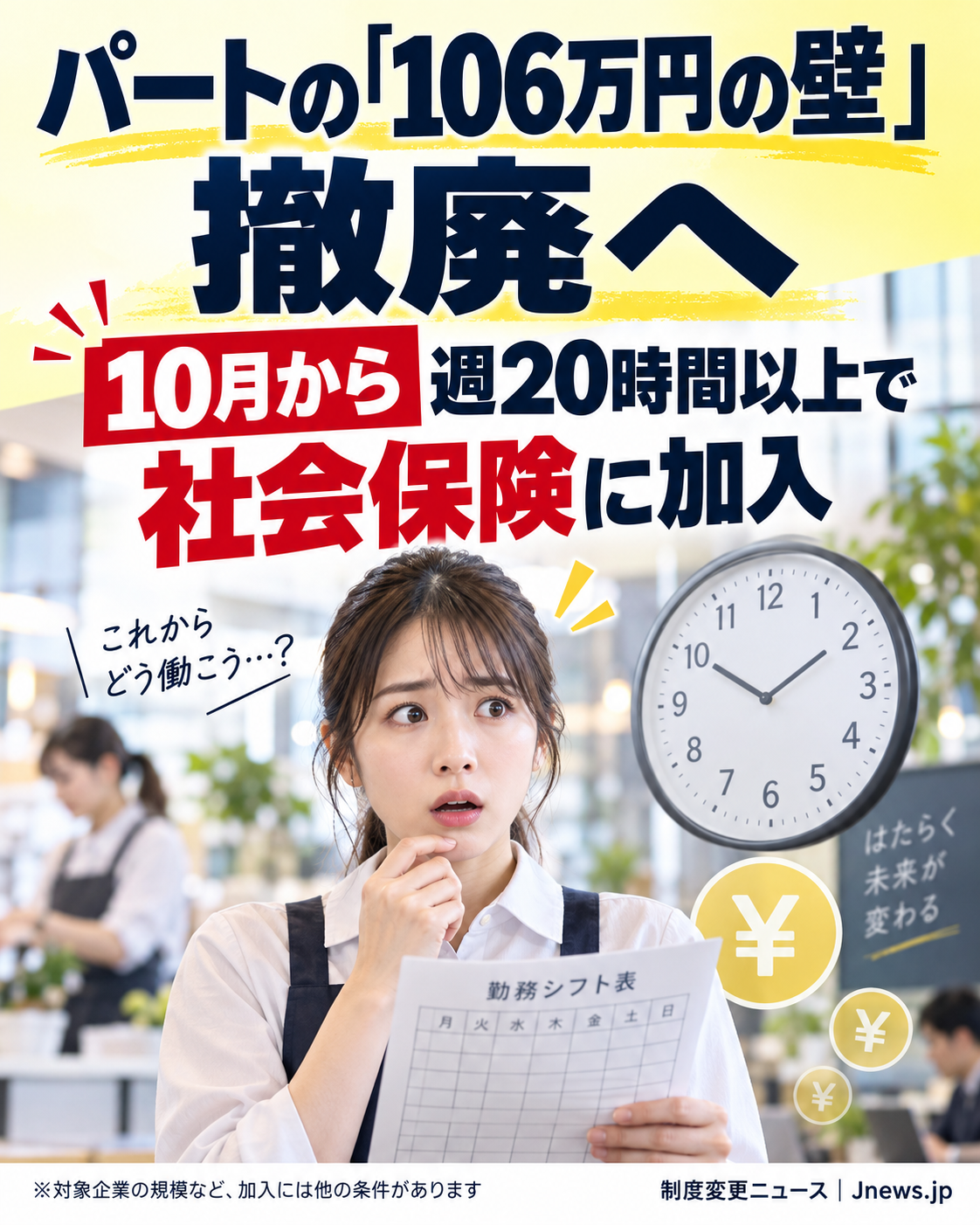
パートの「106万円の壁」撤廃へ 10月から週20時間以上で社会保険に加入

Removal of the "1.06 Million Yen Barrier" for Part-Time Workers: Social Insurance Coverage for 20+ Hours per Week from October

10月から、パートやアルバイトで働く人たちの「106万円の壁」が撤廃てっぱいされることになりました。これまでは収入しゅうにゅうを抑えて働いていた人にとっても、働き方を見直す大きな転換てんかんとなります。

From October, the "1.06 million yen barrier" for part-time and casual workers will be abolished. This marks a major shift for those who previously limited their earnings while working.

今回の見直しみなおしは、2025年に成立せいりつした年金制度改正かいせい法に基づいています。社会保険しゃかいほけんの加入要件ようけんであった「月額賃金ちんぎん8万8000円以上(年収換算で約106万円)」という基準きじゅんが、法律上なくなります。

This revision is based on the Pension System Reform Law enacted in 2025. The criterion of "monthly wage of 88,000 yen or more (approx. 1.06 million yen converted annually)" for social insurance eligibility will legally cease to exist.

10月以降は、企業の規模きぼなどの条件を満たしていれば、年収額に関わらず週20時間以上働けば社会保険の対象たいしょうとなります。保険料ほけんりょうが引き落とされるため手取りてどりが一時的に減る可能性かのうせいはあります。

From October onward, as long as conditions such as company size are met, working 20 hours or more per week makes one eligible for social insurance regardless of annual income. Because insurance premiums will be deducted, take-home pay may temporarily decrease.

一方で、将来受け取る年金額が増額ぞうがくしたり、病気やけがの際に傷病手当金しょうびょうてあてきんなどの保障ほしょうを受けられたりする利点りてんもあります。専門家せんもんかは、目先の手取りだけでなく長期的な視点してんで働き方を選ぶことが大切たいせつだと指摘しています。

On the other hand, there are benefits such as higher future pension payouts and entitlement to protections like sickness and injury allowances if ill or injured. Experts point out that it is important to choose how to work from a long-term perspective, not just based on immediate take-home pay.

日本には所得税がかかる「178万円の壁」や、配偶者はいぐうしゃの扶養ふようから外れる「130万円の壁」など複数の基準が存在します。配偶者の年収が136万円を超えると控除こうじょの種類が変わりますが、169万円までは控除額(多くの場合38万円)自体は変わりません。

In Japan, several thresholds exist, such as the "1.78 million yen barrier" where income tax applies, and the "1.30 million yen barrier" where one leaves spouse dependency status. When a spouse's income exceeds 1.36 million yen, the deduction type changes, but up to 1.69 million yen, the deduction amount itself (380,000 yen in most cases) remains unchanged.

Colour by level N5 N4 N3 N2 N1 Tap a highlighted word for its meaning Tap any word you do not know to look it up right here

Frequently asked questions

What is the "1.06 million yen barrier" in Japanese social insurance?

This is the annual income level (about 88,000 yen/month) that if part-time workers pass, they will have to start participating in social insurance themselves (health insurance and pension benefits) instead of depending on their spouse.

What conditions apply to the abolition of the "1.06 million yen barrier" from October?

From October, the income standard of 88,000 yen/month was officially eliminated. Employees who work 20 hours/week or more at businesses that meet the prescribed scale will be eligible to participate in social insurance regardless of their annual income.

What effect does participating in social insurance have on the salary received (手取り)?

Because the social insurance premium is deducted directly from the monthly salary, the immediate actual income may be temporarily reduced, but in return the employee will receive an increase in future pension and receive sickness and maternity benefits.

Source: Reading exercises compiled by JNews

← Articles

JLPT study area

Create a free account to start the JLPT programme and keep all your progress.

or
Forgot password?

Bilingual articles stay free to read, no account needed.

Choose your language

Japanese content always stays — that is what you are here to learn.

Choose your level before you start

Your account has not picked a level yet. Choose one so JNews opens the right roadmap and drills, and saves your progress.

The other four lock once you choose. You can switch later, but the old level’s progress is erased.