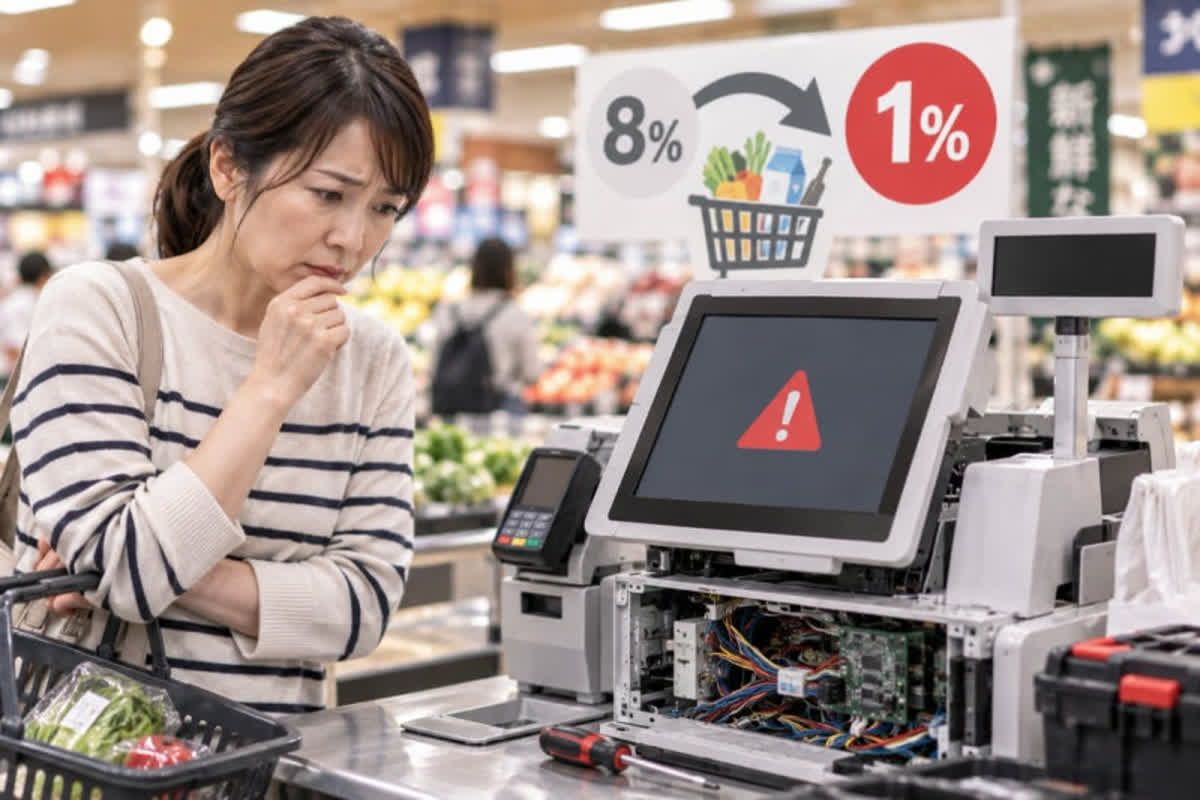
日本政府は2027年4月から食品の消費税率を8%から1%へ引き下げる方針を検討していますが、店舗で使われるPOSシステムの改修が大きな課題として浮上しています。高市早苗首相は、こうした古いシステムの対応遅れを「日本の恥」と厳しく表現しました。
The Japanese government plans to lower the consumption tax rate on food from 8% to 1% starting April 2027, but updating store POS systems has emerged as a major hurdle. Prime Minister Sanae Takaichi harshly described the delay in adapting these legacy systems as a "shame for Japan."
大手流通企業が運用するPOSは会計だけでなく、在庫や価格管理と複雑に連携しているため、税率変更には全体の計算ロジックを修正しなければなりません。特に1989年の税導入時に「税が存在する」ことを前提として設計された端末では、不正防止のために0%設定でエラーが出る仕組みもあり、高市首相は5月11日の参議院決算委員会でその「ガラパゴス的」な構造を問題視しました。
POS systems operated by major retailers are intricately linked with inventory and pricing control beyond cash register functions, requiring core logic modifications across the entire system. Notably, terminals designed since the 1989 tax introduction were built on the assumption that a tax exists, with some triggering errors if set to 0% to prevent fraud—an isolated structure PM Takaichi criticized at the Upper House Audit Committee on May 11.
税率を0%に下げる場合は技術者の派遣やシステム書き換えに約1年を要すると見られていましたが、1%であれば既存の8%枠組みを活用して準備期間を約6カ月に短縮できます。与党の公約だった0%ではなく1%が選ばれた背景にはこの技術的理由があり、大手スーパーのライフコーポレーションも会計連携テストを含めて約半年の準備を見込んでいます。
Lowering the tax rate to 0% was expected to require nearly a year for engineer dispatch and system rewriting, whereas a 1% rate reduces prep time to six months by adapting the existing 8% framework. This technical constraint influenced the choice of 1% over the ruling party's promised 0%, with major supermarket chain Life Corporation budgeting roughly half a year for updates and accounting integration tests.
減税に伴う価格設定のタイミングも大きな課題です。食品メーカーは通常4月と10月に価格調整を行うため、2027年4月の直前に駆け込みで値上げを行い、減税による値下げ効果を相殺してしまう懸念が専門家から出されています。その結果、本来消費者に還元されるべき政府の税収分が企業の利益へと移転してしまう恐れがあります。
Timing price adjustments alongside the tax cut poses another major challenge. Since food manufacturers typically adjust prices in April and October, experts warn they might raise prices right before April 2027, neutralizing the benefit of the tax cut. Consequently, tax revenues foregone by the government to benefit consumers risk being transferred into corporate profits instead.
スーパー業界は売上増加よりも、メーカーと消費者との間で価格交渉の負担が増すことを不安視しています。日本スーパーマーケット協会の会長を務めるライフコーポレーションの岩崎高治社長は、業界が減税を単に歓迎していると見られるのは残念であり、現場の対応負担は極めて重いと述べています。
Rather than sales gains, the supermarket industry worries about the heavy burden of price negotiations between manufacturers and consumers. Takaji Iwasaki, president of Life Corporation and chairman of the Japan Supermarket Association, noted it is regrettable if the industry is seen as simply welcoming the tax cut, as operational burdens on the ground remain extremely heavy.
さらに、2年後に税率を1%から再び8%に戻す際の反動も懸念されます。2014年に消費税率が5%から8%へ引き上げられた際、直前には駆け込み需要で売上が約60%急増したものの、増税直後には売上が60〜70%ほど急減しました。今回の減税策は単なる税率の変更にとどまらず、長年蓄積された流通システムの改修という大きな課題を突きつけています。
Furthermore, concerns loom over the impact when the tax rate reverts from 1% back to 8% two years later. When the consumption tax rose from 5% to 8% in 2014, sales surged by about 60% right before the hike due to last-minute buying, only to drop sharply to 60–70% of normal levels immediately after. This tax cut poses challenges far beyond rate adjustments, requiring extensive modernization of decades-old retail infrastructure.