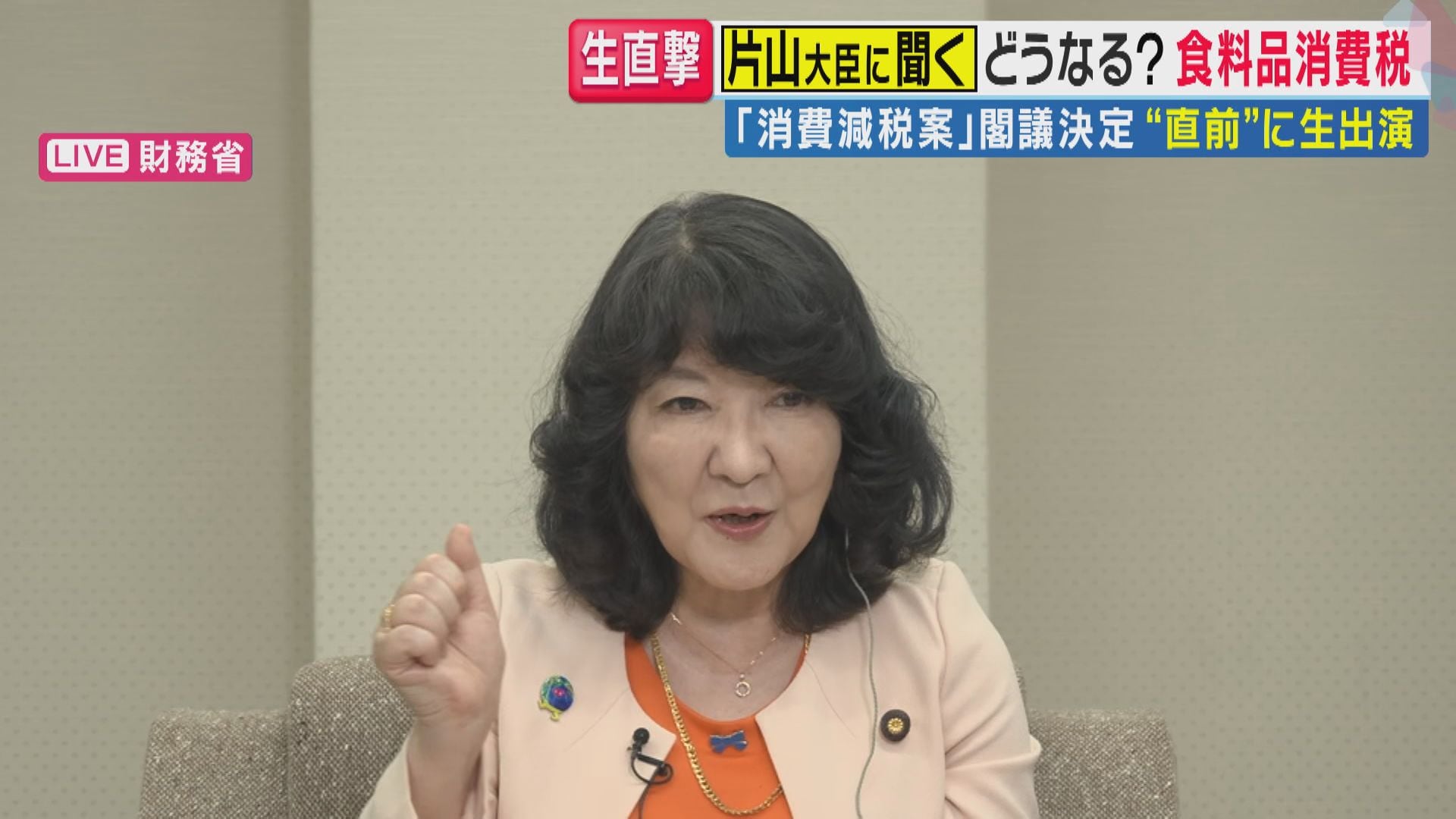
2026年9月15日、片山さつき財務大臣はテレビ番組に出演し、消費税の引き下げ方針について語りました。2027年4月から2年間、食料品に限って消費税を8%から1%へ下げる計画が進められています。
On 15 September 2026, Finance Minister Satsuki Katayama appeared on a television program to discuss plans for cutting the consumption tax. Under the proposed policy, the tax rate on food items alone will be reduced from 8% to 1% for two years starting in April 2027.
片山大臣は、アメリカのベッセント長官もこの政策に深く賛同していると主張しました。減税によって経済を活性化させ、結果として税収を確保する考え方は、米国側も導入したい手法だと説明しました。
Minister Katayama asserted that US Treasury Secretary Bessent strongly supported this policy. She explained that the concept of stimulating the economy through tax cuts to ultimately secure tax revenue is an approach the US side also wishes to adopt.
一方で、米紙ニューヨーク・タイムズは9月1日、異なる内容を報道しました。同紙によると、今年5月に東京都内の高級店で片山大臣と会食した際、ベッセント長官は2時間以上にわたり日本の経済政策に対する不満を打ち明けたとされています。
On the other hand, the US newspaper The New York Times reported a different story on 1 September. According to the report, during a dinner at a high-end restaurant in Tokyo in May this year, Secretary Bessent spent over two hours expressing dissatisfaction with Japan's economic policies.
記事によると、ベッセント長官は行き過ぎた円安が日本のインフレを悪化させているとの認識を示しました。さらに、高市政権の経済手法を批判し、日本銀行が利上げを行うべきだと主張したと伝えられています。
According to the article, Secretary Bessent expressed the view that excessive yen weakness was worsening inflation in Japan. Furthermore, he reportedly criticized the Takaichi administration's economic strategy and argued that the Bank of Japan should raise interest rates.
また、トランプ大統領は長年、円安が米国の輸出業者に悪影響を与えると訴えてきました。ベッセント長官は日銀の独立性についても疑問を投げかけたとされており、日米間の経済政策をめぐる見解の違いが浮き彫りになっています。
In addition, President Trump has long maintained that a weak yen adversely affects American exporters. Secretary Bessent reportedly questioned the independence of the Bank of Japan, highlighting differing views between Japan and the US regarding economic policy.