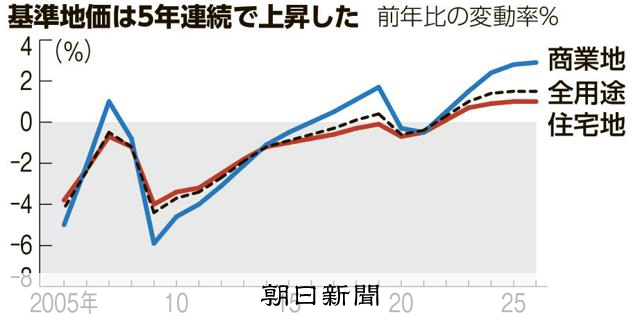
国土交通省は2026年9月15日、全国の基準地価を発表しました。全国の全用途の平均は前年比で1.5%上昇し、5年連続で前年を上回りました。しかし、建設費の高騰や地方の人口減少などが影響し、伸び率は前年並みの水準にとどまりました。
On September 15, 2026, Japan's Ministry of Land, Infrastructure, Transport and Tourism announced the national standard land prices. The national average across all land uses rose 1.5% from the previous year, marking the fifth consecutive year of increase. However, affected by surging construction costs and regional population decline, the growth rate remained flat compared to the previous year.
今回の調査は7月1日時点で、都道府県が全国2万1456地点の地価を調べ、国交省がまとめたものです。住宅地の全国平均上昇率は1.0%で前年と同じでした。一方、商業地は2.9%となり、前年の2.8%からわずかに拡大しました。
This survey was conducted by prefectures at 21,456 locations nationwide as of July 1 and summarized by the ministry. The national average increase for residential land was 1.0%, unchanged from the previous year. Meanwhile, commercial land rose 2.9%, expanding slightly from 2.8% in the previous year.
地域別で見ると、東京圏の上昇率は5.4%、大阪圏は3.6%となり、ともに前年より伸び幅が広がりました。それに対して、名古屋圏は1.9%となり、前年の2.1%から上昇が抑制されました。郊外の割安な土地を求める動きが影響したと見られます。
By region, the rate of increase reached 5.4% in the Tokyo area and 3.6% in the Osaka area, both accelerating from the previous year. In contrast, the Nagoya area rose by 1.9%, slowing from 2.1% in the previous year. A movement toward seeking relatively cheaper land in the suburbs is believed to have influenced this trend.
札幌、仙台、広島、福岡の「地方4市」の上昇率は4.1%で、前年の5.3%から伸び悩みました。また、地方4市を除く地方圏の全用途平均は0.2%の上昇で、前年と変わらず横ばいとなりました。動向には地域ごとの格差が見られます。
The increase rate in the "Four Regional Cities"—Sapporo, Sendai, Hiroshima, and Fukuoka—stood at 4.1%, slowing down from 5.3% the previous year. Additionally, regional areas excluding these four cities saw an average rise of 0.2% across all land uses, remaining flat from the previous year. Market trends show clear disparities among different regions.