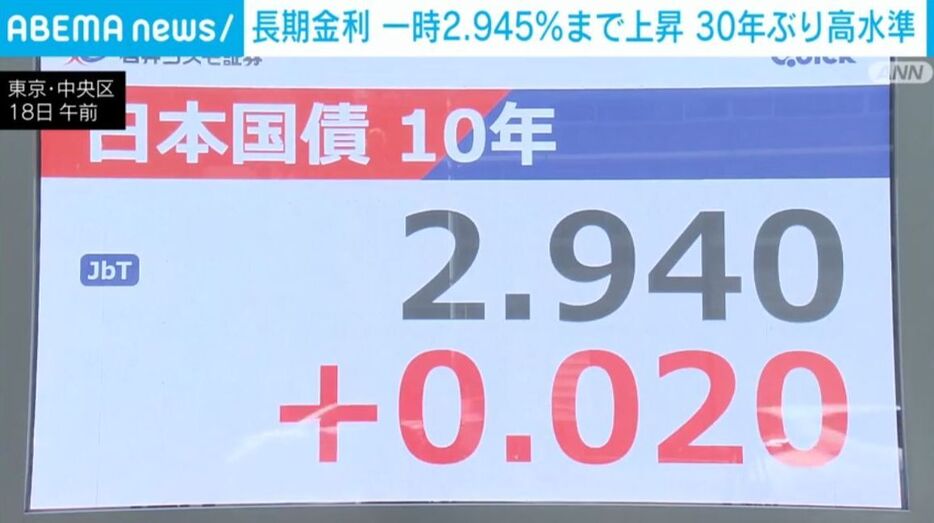
18日の東京債券市場で、長期金利の指標となる新発10年物国債の流通利回りが一時、2.945%まで上昇しました。日本相互証券によると、1996年10月以来、約30年ぶりの高水準です。債券価格は下落し、市場では「トリプル安」(債券・円・株の同時下落)の展開となりました。
On the 18th in the Tokyo bond market, the yield on the newly issued 10-year government bond, the benchmark for long-term interest rates, temporarily rose to 2.945%. According to Japan Mutual Securities, this is the highest level since October 1996, about 30 years. Bond prices fell, and the market saw a “triple soft” situation (bonds, yen, and stocks all declining).
長期金利の上昇の背景には、いくつかの要因があります。まず、インフレ(物価上昇)加速への懸念です。物価上昇が続く中、市場では日本銀行が利上げを前倒しで実施するとの観測が強まっています。また、海外の金利上昇や原油価格の高騰も影響を与え、国債を売る動きが広がりました。
There are several factors behind the rise in long-term rates. First is concern about accelerating inflation. With prices continuing to rise, market expectations have strengthened that the Bank of Japan will bring forward interest rate hikes. In addition, rising overseas interest rates and higher crude oil prices have also had an impact, spreading the move to sell government bonds.
この影響で、東京株式市場では日経平均株価が大幅に下落しました。金利上昇は企業の借入コストを高め、株式の魅力を相対的に低下させるためです。特に半導体関連など成長株が売られる場面が見られました。一方、銀行株など金利上昇の恩恵を受ける業種は相対的に堅調でした。
As a result, the Nikkei Stock Average on the Tokyo stock market fell sharply. Higher interest rates increase companies’ borrowing costs and relatively reduce the attractiveness of stocks. Growth stocks such as semiconductors were particularly sold. On the other hand, bank stocks and other sectors that benefit from higher rates were relatively firm.
為替市場では円が弱含む展開となりました。日米の金利差が意識される中、円売り・ドル買いが進み、1ドル=159円台半ばで取引される場面もありました。円安は輸出企業にはプラスですが、輸入物価の上昇を通じて家計の負担をさらに重くする可能性があります。
In the foreign exchange market, the yen weakened. With the interest rate differential between Japan and the United States in focus, yen-selling and dollar-buying progressed, and the rate traded in the mid-159 yen per dollar range at times. A weaker yen is positive for export companies, but it may further increase the burden on households through higher import prices.
長期金利の上昇は、住宅ローンや企業の資金調達コストにも影響を及ぼします。変動金利型の住宅ローンを利用している世帯では、返済額が増える可能性があります。また、政府の債務残高が大きい日本では、金利上昇が財政負担を重くするとの懸念も指摘されています。
The rise in long-term rates also affects housing loan and corporate funding costs. Households using variable-rate mortgages may see higher repayments. In addition, with Japan’s large outstanding public debt, concerns have been raised that higher rates will increase the fiscal burden.
市場関係者の間では、長期金利が3%の節目を超える可能性も意識され始めています。日銀の金融政策や政府の財政運営、海外の経済動向が今後の金利動向を左右する鍵となります。家計や企業は、金利上昇を前提とした資金計画の見直しを進める必要が出てきそうです。
Market participants have begun to factor in the possibility that long-term rates will exceed the 3% level. The Bank of Japan’s monetary policy, the government’s fiscal management, and overseas economic trends will be the keys that determine future interest rate movements. Households and companies will likely need to review their financial plans on the assumption of higher rates.