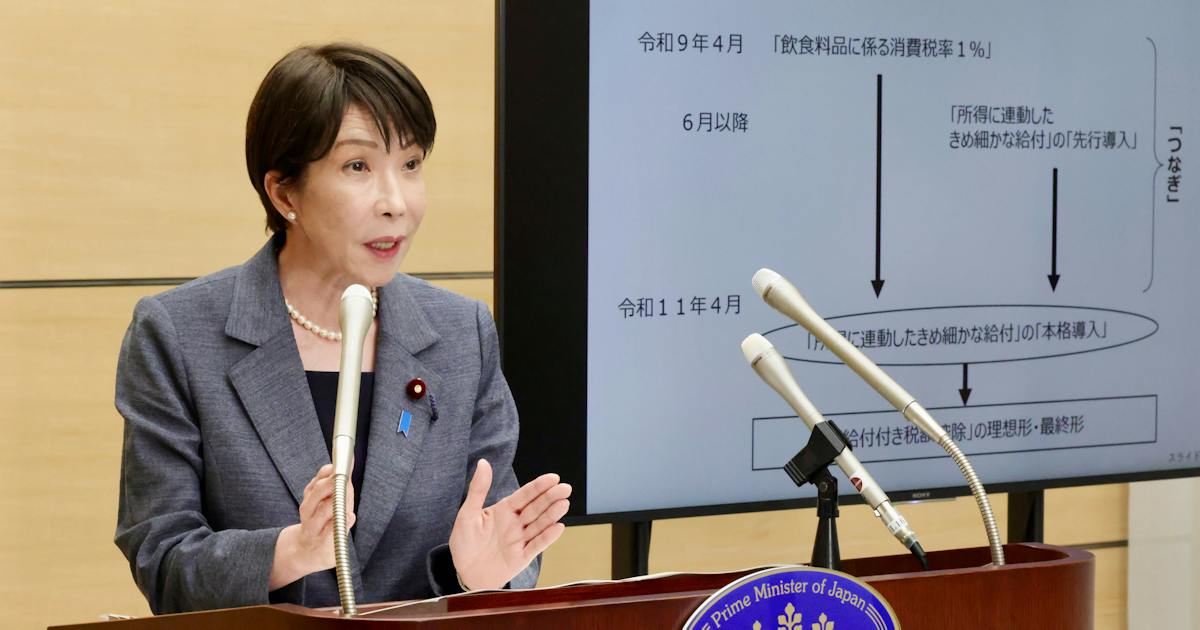
日本政府は、食料品にかかる消費税率を2027年4月から2年間の期間限定で1%に下げる方針を閣議決定しました。高市政権のもと、現行の8%から大幅に引き下げ、2029年4月に再び8%に戻す計画です。
The Japanese government has approved a tax reform outline to lower the consumption tax rate on food to 1% for a limited two-year period starting April 2027. Under the Takaichi administration, the rate will drop significantly from the current 8% before returning to 8% in April 2029.
政府は2029年度から所得に連動した給付制度を本格的に導入する予定です。それまでの2027年度と2028年度は、中低所得者を対象に、減税分に相当する規模の支援金を先行して支給します。
The government plans to fully introduce an income-linked benefit system starting in fiscal 2029. Prior to that, in fiscal 2027 and 2028, advance support payments corresponding to the tax reduction will be provided to middle- and low-income individuals.
食料品の減税により、年間で約4.3兆円の税収減少が試算されています。政府は赤字国債などの特例公債に依存せず、歳出や歳入の全体的な見直しを行って財源を確保する方針を示しました。
Reducing the food tax is estimated to reduce annual tax revenue by about 4.3 trillion yen. The government indicated plans to secure funding by reviewing overall budget expenditures and revenues, rather than relying on deficit-covering special bonds.
減税に伴う地方の税収減少については、地方特例交付金によって全額が補塡されます。また、給付制度の費用負担については、国が3分の2以上を担い、残りを都道府県と市町村が半分ずつ分担することになります。
Reductions in local tax revenue resulting from the tax cut will be fully compensated through special local grants. Regarding the cost of the benefit system, the national government will cover at least two-thirds, with prefectures and municipalities splitting the remaining portion equally.
あわせて、売上減少が懸念される農林漁業者への給付金や、外食事業者のテイクアウト支援なども含まれています。公金受取口座を登録している人には申請なしで振り込まれる仕組みも整備される予定です。
In addition, the policy includes benefit payments for agriculture, forestry, and fisheries workers concerned about declining sales, as well as takeout support for food service businesses. A system is also expected to be established to deposit benefits automatically without application for individuals who have registered public payment accounts.