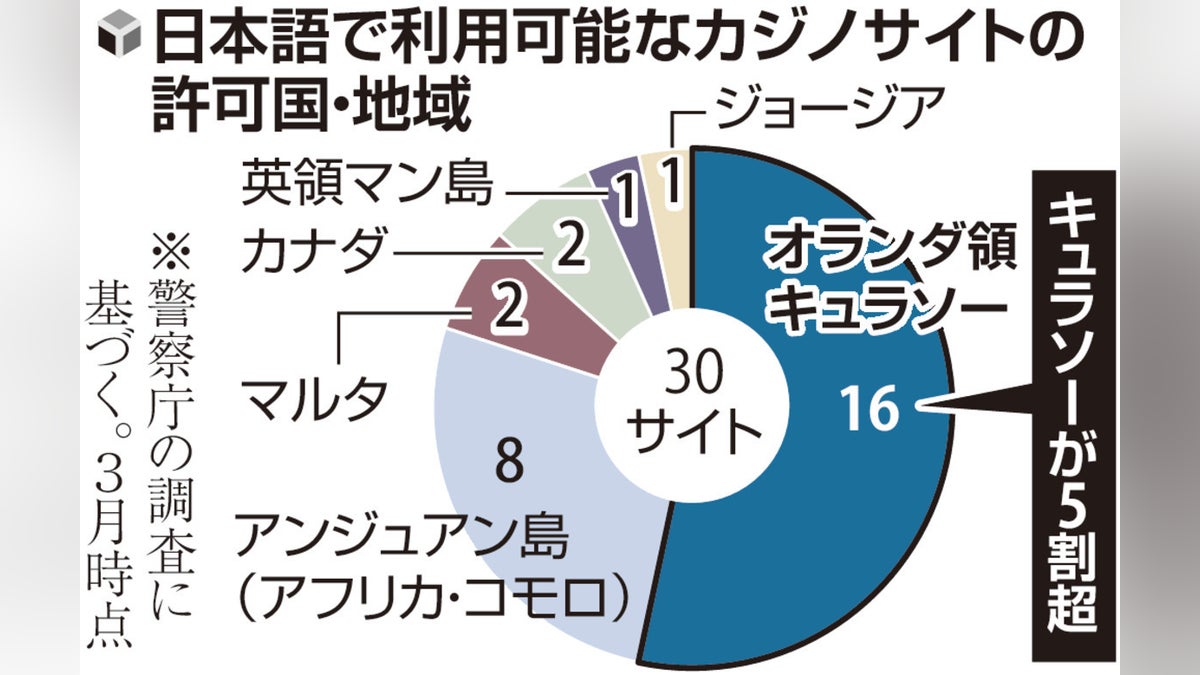
2026年9月16日、警察庁は日本向けのオンラインカジノを許可している中米・オランダ領キュラソー当局に対し、日本向けサービスの停止を要請しました。日本語で利用できるカジノサイトの約5割が同地域のライセンスを受けていることが判明しており、同庁の幹部が初めて現地を訪問して強い対応を求めました。
On September 16, 2026, Japan's National Police Agency requested authorities in Curaçao, a Dutch Caribbean territory, to stop online casino services targeting Japan. About 50% of Japanese-accessible casino sites were found to hold licenses from Curaçao, prompting a senior police official to visit the region for the first time to ask for firm action.
警察庁が今年3月に実施した調査によると、日本語で利用可能な海外のカジノサイトは30件確認されました。許可を出している国や地域別ではキュラソー島が16サイトで最多となり、アフリカのコモロ・アンジュアン島が8サイトで続いています。
According to a survey conducted by the National Police Agency in March this year, 30 overseas casino sites accessible in Japanese were confirmed. By licensing country or region, Curaçao was the highest with 16 sites, followed by Anjouan Island in Comoros, Africa, with 8 sites.
昨年9月に施行された改正ギャンブル等依存症対策基本法では、日本向けのカジノサイトを開設や運営をすることが違法であると明確に明記されましたが、日本からアクセスできる海外サイトは依然として多く存在しています。
Although the revised Basic Act on Gambling Addiction Countermeasures, which took effect in September last year, explicitly states that establishing or operating casino sites targeting Japan is illegal, numerous overseas sites remain accessible.
警察庁は2024年5月以降、外務省を通じて関係国への働きかけを続け、サイトの閉鎖や日本からの接続を拒否する遮断措置を要求してきました。その結果、日本語サイト数は昨年3月時点より10サイト減少し、コスタリカや英領ジブラルタルのサイトは日本から接続できなくなりました。
Since May 2024, the police agency has worked through the Ministry of Foreign Affairs to urge relevant nations to close sites or block connections from Japan. As a result, the number of Japanese-language sites decreased by 10 compared to March last year, and sites from Costa Rica and British Gibraltar are now inaccessible from Japan.
しかし、キュラソーで許可を受けた事業者による16のサイトは現在も対象サービスを継続しています。警察庁が委託する「インターネット・ホットラインセンター」もサイトの削除要請を重ねていますが応じる事業者は少なく、法的な実効性を確保して日本の法律を守らせることが今後の指導上の課題となっています。
However, 16 sites operated by Curaçao-licensed providers continue to target Japan. The Internet Hotline Center, contracted by the agency, has repeatedly requested site deletions, but few operators comply, making effective enforcement a key challenge for future guidance.